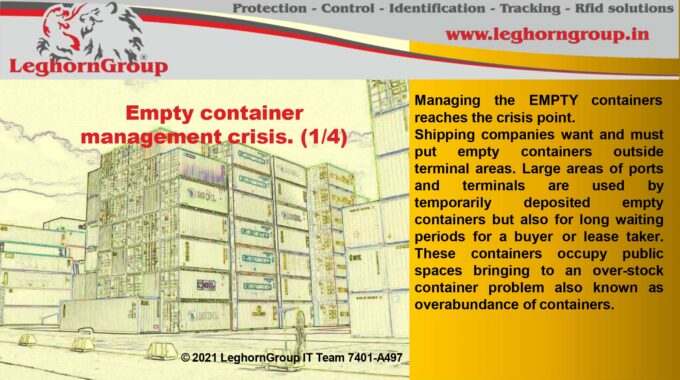
Managing the EMPTY containers reaches the crisis point. Shipping companies want and must put empty…
Load Securing. How to Pack a Pallet.
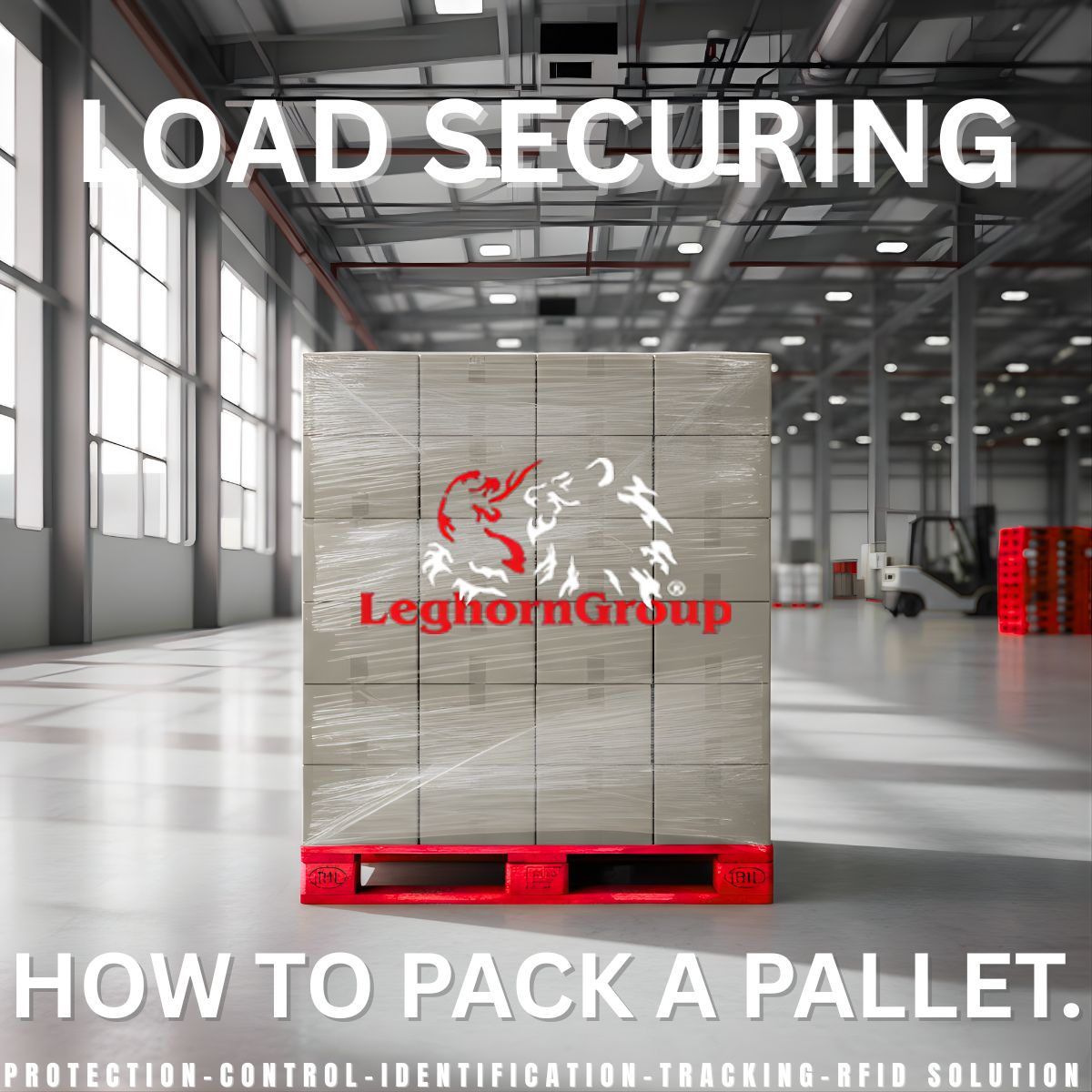
Load Securing. How to Pack a Pallet.
Achieving an efficient shipment requires a solid packaging culture at every stage. Load Securing, especially in terms of stability, is a key factor to guarantee safe and uninterrupted transport. Understanding How to Pack a Pallet correctly helps prevent damage, delays, and unnecessary costs.
Below are the essential steps to ensure proper Load Securing and to understand How to Pack a Pallet effectively:
a) Select suitable cardboard boxes, preferably double-wall cartons, as they offer higher resistance.
b) The box dimensions must be designed so that the goods inside have no room to move. This optimizes the overall pallet volume and improves Load Securing.
c) Use treated pallets. Wooden pallets intended for international trade undergo phytosanitary treatment to eliminate potentially harmful organisms.
d) To achieve correct Load Securing, palletize the cartons up to the edges of the pallet, without exceeding its dimensions.
e) Fill any empty spaces with bubble wrap so that the completed pallet is as compact as possible.
f) If required, use pallet covers suitable for the type of goods being shipped.
– Standard pallet covers with rings along the lower edges to secure them to the pallet using numbered security seals.
– Thermal pallet covers for goods sensitive to temperature changes.
– Waterproof pallet covers.
g) Pallets loaded onto a vehicle, such as a container, must not have empty spaces between them. Use air-filled dunnage bags to prevent harmful load movements.
h) Loaded containers must be sealed with high-security seals certified according to ISO 17712:2013
All these measures are essential for effective Load Securing and for maintaining a high level of customer care service. At the same time, they help reduce complaints, emails, and claims. A well-organized shipment allows your Brand to be recognized as reliable, efficient, and professional.
Palletizing Goods on a Pallet.
Knowing How to Pack a Pallet and palletize goods correctly helps minimize risks during transport and ensures that products arrive at their destination in perfect condition.
LeghornGroup has been operating in the logistics sector for many years and has gained strong expertise in Load Securing and tamper prevention during transport.
In practice, this means making the load as safe as possible.
This also requires careful selection of the most suitable packaging and protection solutions.
Choosing the Right Pallet.
Since pallet return is generally not expected in most domestic and international shipments, the ideal solution is to choose a pallet that is as light as possible, without affecting the overall load weight, yet strong enough to withstand impacts and cost-effective.
Both pressed-wood pallets and plastic pallets can be used.
It is essential to comply with the FAO ISPM 15 regulation, which governs wooden packaging materials for international shipments.
In addition, each country applies specific restrictions to protect its territory from contamination or parasites.
For this reason, using a lightweight plastic pallet may help avoid the risk of goods being stopped at customs due to regulatory non-compliance. For frequent shipping cycles, pressed-wood pallets are recommended, as they are slightly more expensive but significantly more robust than plastic pallets.
How to Position Goods on a Pallet.
When stacking cardboard boxes, it is always advisable to use double-wall cartons, as they are more resistant and improve Load Securing.
Placing a sheet of corrugated cardboard on the bottom of the pallet helps protect the lower layers from moisture and distributes weight evenly across the pallet surface.
Another important rule when learning How to Pack a Pallet is to place heavier boxes at the bottom and lighter ones on top.
This prevents dangerous load collapse.
Boxes should be positioned as close as possible to the edges of the pallet, without exceeding them.
This provides maximum pallet stability and reduces the risk of tearing or damaging the cartons.
Avoid building a pyramid by placing smaller boxes on top.
The most effective solution is to alternate large and small boxes to create a cube-shaped structure.
In practice, Load Securing is achieved by making every step of the process as safe as possible.
External Protection of the Pallet.
Once the goods have been positioned correctly, the next step is external protection.
Start by wrapping sharp edges and cutting surfaces with bubble wrap or polyethylene rolls.
Then cover the entire load with stretch film to keep the goods compact.
After that, use strapping to secure the load to the pallet.
One single pass is sufficient when fixing a single carton, while two passes are required when multiple cartons are present.
When shipping loose goods or cartons containing small items, it is recommended to use corner protectors for strapping.
This prevents damage to both the cartons and the goods during Load Securing.
Pallet Covers.
There are three main types of pallet covers used for Load Securing:
a) Simple nylon covers with eyelets at the base, secured to the pallet using numbered security seals. These covers help prevent tampering or theft during transport.
b) Thermal covers that maintain temperature stability for a limited period.
c) Waterproof covers designed to prevent rainwater infiltration that could damage the cartons.
All these pallet covers and related security seals are manufactured by LeghornGroup.
How Pallets Must Be Loaded into Containers
According to the International Maritime Organization circular no. 1497 dated 16/12/2014, containers must be loaded correctly to ensure maximum Load Securing.
This regulation aims to prevent cargo damage caused by load shifting inside the container, which could trigger chain reactions during sea transport.
Once the pallets are correctly prepared, container stability must be ensured by eliminating empty spaces between pallets using air-filled dunnage bags (Air bags).
How to Seal a Container
Sealing a container is essential, regardless of the type of goods transported.
High-security seals such as bolt seals, cable seals, or barrier seals manufactured by LeghornGroup and certified according to ISO 17712 standards should always be used.
These seals are suitable for containers, trucks, and trailers.
LeghornGroup provides a complete range of high-security container seals compliant with ISO 17712:2013.
For maximum Load Securing, the use of passive RFID seals is recommended.
These seals can indicate the container status when read: open, closed, or tampered.
These three pieces of information are ESSENTIAL to ensure correct and secure container closure.
Final Checks
Before opening the container, always check that the seal matches the shipping documentation.
Seal model
Color
Numbering
These are the first details that must be verified.
Open the container carefully, as the load may have shifted and could fall.
© 2025 LeghornGroup IT Team 7401-A2066
Related Posts